



By Rubén Darío Basay Roberts
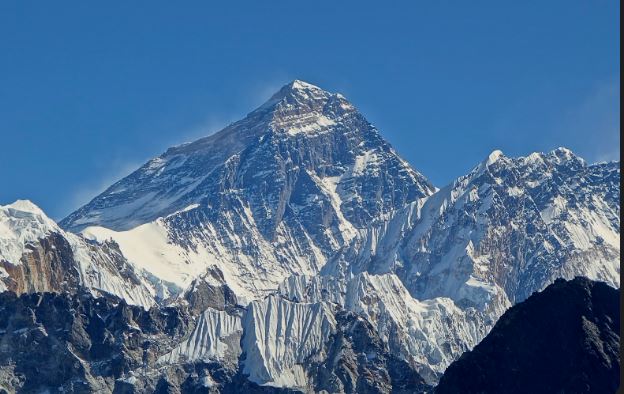
At an altitude of 8,848.86 meters above sea level—a place where the Earth seems to meet the sky—humanity has left behind one of the most contradictory marks of its existence.
There, where thousands have dreamed of finding glory, the remains of approximately two hundred people who never returned home still lie. They were fathers, mothers, children, siblings, and friends who embarked on the most significant journey of their lives, never imagining that the mountain would become their final resting place.
Alongside them remain oxygen canisters, tents, ropes, plastic, and human waste. How is it possible that the highest point on Earth has turned into a symbol of our environmental irresponsibility?
Those Who Never Returned
On May 29, 1953, Edmund Hillary and Tenzing Norgay successfully reached the summit of Everest—the first confirmed ascent. Since then, reaching the peak has become a dream for people from nations across the globe.
More than three hundred people have lost their lives on the mountain. Although there is no definitive, verified count, it is estimated that approximately two hundred bodies still remain there. The intense cold slows the decomposition of these bodies, while mountain snow and ice conceal some of the remains.
Recovering these bodies is a dangerous and costly operation. Above 8,000 meters lies what is known as the “death zone.” At the summit, the partial pressure of oxygen is approximately one-third of that found at sea level.
A study published in 2009 in The New England Journal of Medicine revealed extremely low blood-oxygen levels in mountaineers at an altitude of 8,400 meters. Oxygen deprivation (hypoxia) impairs cognitive function, physical coordination, and decision-making abilities.
Behind every body lies the story of a life cut short—and a family that once waited for news that never arrived.
The world’s highest junkyard
What began as an adventurous pursuit, reserved exclusively for experienced explorers, has ultimately evolved into a global tourism industry.
In 2024, a campaign by the Nepalese Army successfully removed eleven tons of waste, four bodies, and the skeletal remains of one individual from Everest and two other Himalayan peaks.
It is difficult to comprehend how someone can spend years preparing, invest significant sums of money, and acquire high-tech equipment to reach a mountain summit—yet fail to take responsibility for removing their own waste. One of the less-discussed problems is the accumulation of human waste. Low temperatures prevent it from decomposing naturally. In 2024, local authorities in Nepal mandated the use of special bags to collect this waste in areas above the base camp.
Why have regulations become necessary to compel us to respect one of the most extraordinary places on Earth?
Plastic has also reached the summit of Everest.
In 2020, a study led by scientist Imogen Napper, published in the journal One Earth, discovered microplastics in snow samples collected at altitudes of up to 8,440 meters.
Polyester fibers were the most prevalent among the particles found, likely originating from mountaineering clothing and equipment.
We have found plastic in the depths of the ocean and near the top of the world. Our capacity to pollute the environment seems to exceed our capacity to protect it.
The shrinking of mountain glaciers and changes in ice layers may reveal equipment and human remains left behind decades ago. It is as if the mountain has begun to return the consequences of our history to us. The True Heroes of the Himalayas
While images of those reaching the summit of Everest circulate on social media, many Nepalese workers—most of them from the Sherpa community—perform vital tasks that rarely receive the same level of recognition.
They carry equipment, prepare routes, accompany climbing groups, and participate in rescue and cleanup operations, risking their lives in extremely harsh conditions.
We must acknowledge not only those who reach the summit but also those who make it possible for others to return home. We should also recognize those who work to restore the mountain’s dignity.
The Next Great Victory for Everest
I am fascinated by the discipline, endurance, and courage required for mountaineering. Yet, we must ask ourselves: at what point did the legitimate desire for self-improvement become conflated with the urge to dominate nature?
Authorities, tourism companies, and athletes share a collective responsibility. Ensuring the removal of waste, protecting mountain workers, and funding cleanup operations should be among the essential requirements for any climbing expedition.
I propose that the next great victory for Everest should be the recovery of the bodies of those who lost their lives there—wherever it is safe to do so.