



By Rubén Darío Basay Roberts
There is a Venezuelan somewhere in the world. In hospitals in Madrid, on the streets of Santiago, Chile, in Miami restaurants at universities in Buenos Aires and in shops in Lima. We recognize their accents, discover their food and share their customs but rarely ask how much pain may hide behind a smile.
When did they last embrace their mother?, How many years have passed since they walked the streets of their childhood?, How many relatives have died without a chance to say goodbye?.
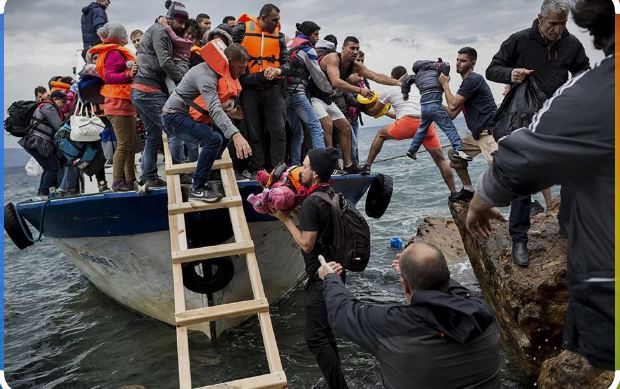
Humanity is witnessing one of the largest international exoduses in recent Latin American history with one extraordinary characteristic: Venezuela is not experiencing a conventional war.
THE GLOBAL SCALE OF THE EXODUS
International estimates from UNHCR and the R4V platform placed the number of Venezuelan refugees and migrants outside their country at around eight million by late 2025.
Colombia hosts approximately 2.8 million and Peru more than 1.5 million. The United States, Brazil, Chile, Spain, Ecuador, Argentina and Mexico also host significant Venezuelan communities. These figures come from national records and international estimates using different methods and reporting dates.
According to the International Monetary Fund, Venezuela’s economy contracted by more than 75% between 2013 and 2021, one of the largest peacetime contractions recorded in recent decades. Yet no statistic can fully measure the suffering of those compelled to leave their homeland.
THE PAIN OF BEING UNABLE TO RETURN
Traveling by choice is one thing, leaving the place where you wish to remain is quite another. Many Venezuelans lack the financial resources, security guarantees or necessary conditions to return. Some face documentation problems, others fear losing the stability they have struggled to build.
Forced displacement does not end when someone finds a job a home or legal residency. There are fathers and mothers growing old while waiting for their children to return. Grandmothers who meet grandchildren through a screen. Children growing up without grandparents and families celebrating birthdays thousands of kilometers apart.
There are also those who remained in Venezuela, awaiting a phone call, a money transfer or news of a possible reunion. Migration transforms not only the lives of those who leave, but also the lives of those who stay. Some suitcases carry more memories than clothes and some farewells last a lifetime.
THE DIGNITY OF STARTING AGAIN
Doctors have become street vendors, engineers have begun driving cars, and teachers have had to learn new trades. They did not lose their knowledge. Often, they lost the opportunity to use it.
Discrimination, xenophobia, labor exploitation and difficulty finding housing can compound these challenges. No one should be judged solely by nationality. The actions of individuals must not become a collective condemnation of millions. Behind every migrant is a person who deserves to be recognized for their own story.
WHEN VENEZUELA JOINS OUR TABLE
Migration carries centuries of culture. Arepas, cachapas, tequeños, pabellón criollo and traditional Christmas hallacas have found new homes across the Americas and Europe. Hallacas now share tables with Chilean empanadas, Spanish tortillas and Italian pasta.
Music, popular expressions, religious celebrations and family traditions also travel. Preparing a childhood recipe can become a symbolic return home. Food can achieve what speeches sometimes cannot: bringing people of different nationalities around the same table.
THE BIRTH OF NEW MULTICULTURAL GENERATIONS
The world is changing, sometimes without our noticing. Venezuelans who marry Chileans, Spaniards, Colombians, Italians or Brazilians are forming new multicultural families. In Chile, birth statistics from the National Statistics Institute already record thousands of births each year to Venezuelan mothers.
Although there is no consolidated global register of binational marriages linked to this exodus, the demographic consequences deserve study. We are witnessing generations of Venezuelan-Chileans, Venezuelan-Spaniards, Venezuelan-Italians and other shared identities.
Children of different backgrounds may celebrate two national holidays, speak different languages and feel connected to more than one homeland.
Some may know Venezuela only through photographs, family stories and songs their parents listened to as children. Migration changes cultural borders without changing political ones.
AN ECONOMY THAT RECEIVES, STRAINS AND TRANSFORMS
In 2022, the International Monetary Fund projected that successful integration of Venezuelan migrants could increase real GDP in Chile, Colombia, Ecuador and Peru by between 2.5% and 4.5% by 2030, compared with a scenario without that migration.
However, these potential gains coexist with increased demand for housing, education, healthcare, transport and employment. Remittances also form an economic and emotional link between those who emigrated and those who remained.
Each transfer may mean food for a mother, medicine for a grandfather or education for a child. Public policies must respond to the needs of receiving communities while ensuring dignified conditions of integration for newcomers.
A CHANGING WORLD
For decades, Venezuela welcomed Spaniards, Portuguese, Italians and other Latin Americans seeking new opportunities. Today, history has reversed those roles.
Perhaps in a hundred years, millions of Venezuelan descendants will never have visited Caracas, Maracaibo or Angel Falls, yet will preserve family names, recipes and ancestral stories. Humanity is creating new identities through encounters that, paradoxically, began with painful departures.
FROM VENEZUELA, WITH LOVE
The next time we meet a Venezuelan, perhaps we should remember that behind the accent is a story, a family and a homeland they may deeply miss. Not everyone emigrated because they wanted to discover the world. Many left because circumstances made it impossible to remain in their own.
Perhaps one day they will return, reunite with loved ones and walk the streets of their childhood again. May that return be a choice, not another obligation. Meanwhile, wherever their customs flourish and their descendants are born, a small part of the land that once welcomed them into the world will live on. Because human beings can love two homelands without betraying either.
From Venezuela, with love, to the world.
Rubén Darío Basay Roberts
Writer, communicator, lecturer and student of public policy
https://basayroberts.cl
DOCUMENTARY SOURCES
UNHCR: https://www.unhcr.org
International Organization for Migration: https://www.iom.int
R4V Inter-Agency Coordination Platform: https://www.r4v.info
International Monetary Fund: “Venezuelan Migrants Bring Economic Opportunities to Latin America,” December 2022.
Chile’s National Statistics Institute: Vital Statistics Yearbook
2023.