



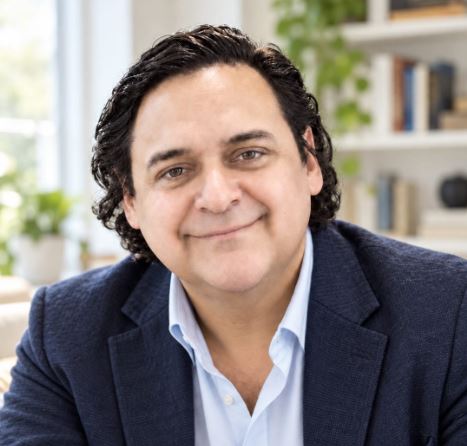
By: Rubén Darío Basay Roberts, communicator and public policy scholar, www.basayroberts.cl
What fault do the world’s children bear for the wars waged by powerful leaders? Why must they pay with their suffering for adults’ inability to reach an agreement?
Somewhere in the world, a child wakes to the sound of bombs. Elsewhere, a young girl searches through rubbish for something to eat. In a large city, a child tries to sleep on a piece of cardboard while thousands of people walk past.
None of them declared a war, caused an economic crisis or chose to be born into poverty. Yet they are the ones who end up paying the price for decisions they never made.
Children in the wars of adults
According to UNICEF, in 2025 more than one in five children worldwide lived in areas affected by armed conflict. In that same year, the United Nations verified 38,558 grave violations of children’s rights in conflict settings, affecting 24,174 children.
In Gaza, Ukraine, Sudan and other regions of the planet, many childhoods unfold amid fear, displacement and the loss of loved ones.
While leaders argue over territories, economic interests, power and ideologies, some children no longer have a school to return to. Adults have negotiating tables; children need tables where they can eat.
How many generations will it take for us to understand that no military victory can give a child back a lost childhood?
Children whose only roof is the sky
Not all wars require weapons. There is also the everyday struggle of children surviving on the streets, under bridges, in abandoned stations or in makeshift shelters. There is no sufficiently reliable global figure establishing precisely how many children live in street situations.
In Chile, a survey conducted in 2018, with results published in 2019, identified 547 children and adolescents who had slept on the street at least once during the previous year without a responsible adult.
These children are exposed to violence, exploitation, illness and neglect. While some children fear sleeping with the lights off, others fear falling asleep because there is nobody there to protect them.
A humanity separated by vast distances
According to UNICEF, 412 million children live in extreme monetary poverty. The International Labour Organization and UNICEF estimated that approximately 138 million children were engaged in child labour in 2024. Of these, 54 million were engaged in hazardous work. Some children learn to use a computer before learning to write, while others learn to work before learning to read.
Some children receive toys; others must sell them to survive. The greatest distance between human beings is not always measured in miles. Sometimes it is measured in opportunities.
Public policies that cannot wait
The Convention on the Rights of the Child, adopted in 1989, recognises children’s rights to education, health, protection and an adequate standard of living. Yet the International Labour Organization estimates that around 1.8 billion people under the age of 18 lack effective coverage of child and family cash benefits.
We need public policies that strengthen social protection, guarantee access to food, prevent domestic violence, facilitate access to decent housing and ensure psychological support and continuity of education.
We need governments capable of investing in the protection of children with the same determination with which they defend their national interests.
Protecting children cannot depend exclusively on charity. It is an enduring responsibility of governments and society as a whole.
When did we begin to lose our humanity?
We are moved when a child speaks their first words, learns to walk or gives us a drawing. Yet we can look at images of children suffering on the other side of the world and continue our activities as though nothing had happened. Perhaps we have become too accustomed to the suffering of others.
A child should never matter more or less because of the country where they were born, the colour of their skin, their parents’ religion or the language in which they learned to say Mum. Childhood has no borders.
An eye for an eye leaves children blind
Revenge does not rebuild schools. Hatred does not feed children. Indifference does not restore anyone’s home. No child should pay for wars they did not declare, borders they did not draw or poverty they did not choose. Why must the smallest suffer the consequences of the most powerful being unable to reach an agreement?
Perhaps the true progress of our civilisation should be measured not by the height of our buildings, the speed of our computers or the power of our armies, but by our ability to protect our most vulnerable inhabitants.
Let us not ask children to build a better world if we cannot give them a world in which they can grow up. An eye for an eye leaves us all blind, but children are the first to be left in darkness. Perhaps true peace begins when no public decision can be made without first imagining the eyes of a child.
Documentary references
- UNICEF (2026). Rethinking child protection in an age of disorder and uncertainty.
https://www.unicef.org/innocenti/stories/2026-global-outlook-rethinking-child-protection - United Nations (2026). Children and Armed Conflict.
https://childrenandarmedconflict.un.org/en/news/statement-vanessa-frazier-special-representative-children-and-armed-conflict-un-security - UNICEF (2025). The State of the World’s Children: Ending Child Poverty.
https://www.unicef.org/reports/state-of-worlds-children/2025 - ILO and UNICEF. 2024 Global Estimates of Child Labour.
https://www.ilo.org/resource/other/2024-global-estimates-child-labour-figures - ILO. World Social Protection Report 2024–2026.
https://webapps.ilo.org/static/english/reports/flagship/world_social_protection_report_2024-26/Executive%20Summary.html - United Nations (2017). General Comment No. 21 on children in street situations.
https://digitallibrary.un.org/record/1304490 - Government of Chile (2019). Survey of children and adolescents in street situations.
https://www.gob.cl/noticias/gobierno-dio-conocer-alarmante-cifra-de-ninos-en-situacion-de-calle-y-medidas-para-abordar-el-problema-en-el-pais/ - Convention on the Rights of the Child (1989).
https://www.unicef.org/es/convencion-derechos-nino/texto-convencion