



Young Tanzanians called for hands-on training, school science clubs and nuclear learning materials in Swahili and English
On 12 November, the Impact Team 2050 Council, Rosatom’s global youth partnership, presented the results of national youth nuclear dialogues to Rosatom Director General Alexey Likhachev.
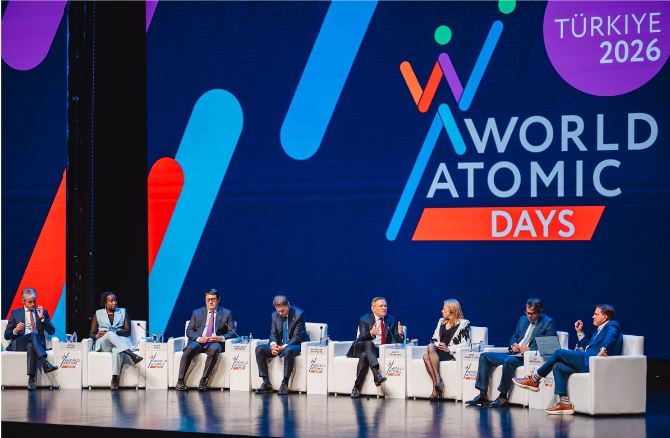
The meeting took place in Antalya, Turkey, at World Atomic Days, Rosatom’s international business forum. Tanzania is represented on the Council by Nuclear Scientist at the Tanzania Atomic Energy Commission (TAEC) Aloyce Paulo Kinemelo.
Tanzania’s dialogue took place in late September at TAEC Headquarters in Arusha. Tanzania Young Generation in Nuclear organised it with Impact Team 2050 members and TAEC support.
Director General of TAEC Professor Najat K. Mohammed delivered the keynote address. Participants called for more hands-on training, nuclear science clubs in schools and universities, and mentoring. They also asked for learning materials in Swahili and English.
In total, 17 dialogues in 15 countries brought together more than 15,000 young people. Council members proposed forming national Impact Team 2050 teams and regional youth nuclear platforms. Alexey Likhachev supported the proposal.
“I am confident that such work should also begin in other regions of the world that you represent: Latin America, Africa, Europe and the Asia-Pacific region”, he highlighted.
Demand for such specialists is growing in Tanzania. In October 2026, Professor Najat K. Mohammed noted rising demand for engineers, physicists, researchers and specialists in radiation safety and nuclear technology.
She cited the Mkuju River uranium project, implemented by Mantra Tanzania, part of Rosatom’s Uranium One Group. A pilot facility began operating there in 2025, and pilot ore mining and processing are under way in 2026.
On 13 November, the forum also hosted the Annual Conference of the BRICS Nuclear Energy Platform. Participants reviewed research on financing nuclear projects through multilateral development institutions and on resilient supply chains for large-scale nuclear power plants.
The forum also launched the second season of the Green Future International Contest of Women’s Environmental Projects, organised by the Council of the Eurasian Women’s Forum and Rosatom. Applications are open until 31 March 2027.
Women’s participation is also a priority for TAEC. Women in Nuclear Tanzania, set up with its support, has grown from about 70 members in 2025 to 160.
In October 2025, Dar es Salaam hosted a forum of graduates of Russian universities, which brought together more than 100 alumni from 11 African countries.
Reference
World Atomic Days 2026, held in Antalya on 12–13 November, is Rosatom’s international business event complementing the COP31 climate agenda. It is one of the global nuclear industry’s key events in 2026. Rosatom organises it for international partners to promote nuclear technologies.
The event is held with the support of the IAEA, the World Nuclear Association and the BRICS Nuclear Energy Platform.
The 31st Conference of the Parties to the UN Framework Convention on Climate Change (COP31) is taking place in Antalya, Turkey, from 9 to 20 November 2026.
It brings together governments, international organisations, business, the scientific community and civil society initiatives to discuss how to combat climate change and develop a low-carbon economy.
Impact Team 2050 is Rosatom’s global youth partnership. Rosatom Director General Alexey Likhachev launched it in December 2021 at the Global Impact Conference.
Its mission is to strengthen Rosatom’s partnership with young leaders abroad and to involve young people in nuclear science and technology. Selection for the Council’s second composition was completed in May 2026.
Out of 207 semi-finalists from 58 countries, 13 young leaders from 13 countries joined the Council. Five of them are from Africa – Egypt, Tanzania, Rwanda, Ethiopia and South Africa. Four members of the first composition continue as mentors. From August to November 2026, Council members and mentors held 17 national youth nuclear dialogues.
From,
Lava Smirnova,
Rosatom Africa PR Support Team.