



From memory of tragedy to structured dialogue
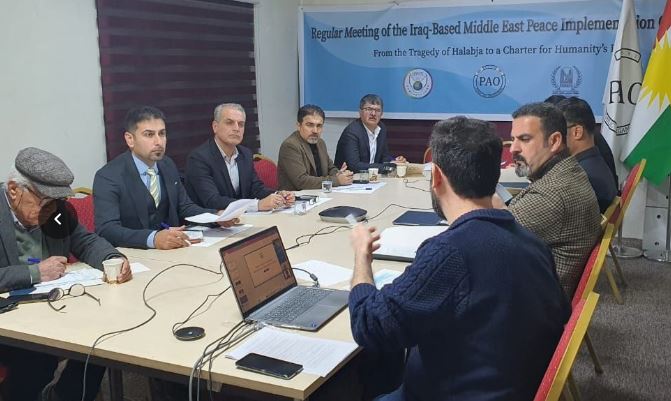
On January 30, 2026, international peace organization HWPL convened a hybrid(online and offline) regular meeting in Erbil, Iraq, bringing together Iraqi civil society leaders as well as figures from religious and academic circles, and formally announced the launch of the Middle East Peace Implementation Committee. The meeting was designed to reflect on the historical significance of the Halabja tragedy and to anchor region-led peace discussions, centered on the Public Aid Organization (PAO), within a structured framework.
Iraq has long been a country where diverse religions and ethnic communities have coexisted, and the 1988 Halabja massacre continues to serve as a reference point in national debates on reconciliation, human rights, and peacebuilding. In recent years, Iraq has entered a phase of relative stabilization, with local governments, religious institutions, and civil society gradually expanding peace and reconciliation initiatives. HWPL has maintained dialogue with religious and civic leaders across the Middle East, steadily broadening platforms for discussion grounded in local realities and needs.
At the center of the meeting was the formal establishment of the Middle East Peace Implementation Committee. The committee brings together participants from civil society, religious communities, legal professionals, and administrative bodies across the region, aiming to address the foundations needed for peace culture in post-conflict societies. Rather than operating as a one-off initiative, the committee is set to function as an ongoing consultative platform led by regional actors, focusing on conflict prevention, interreligious dialogue, and respect for human rights.
Participants also discussed joint programs linked to the March 16, 2026 commemoration of the Halabja chemical weapons attack. Discussions emphasized that the commemoration should go beyond remembrance, serving as an opportunity to reaffirm shared principles of peace and coexistence within Iraqi society. Proposals were reviewed to connect the Halabja remembrance with HWPL’s Declaration of Peace and Cessation of War (DPCW), shaping messages and actions that resonate with local communities.
Pascal Eso Warda, former Iraqi Minister of Immigration and Refugees noted that “peace in the Middle East cannot be achieved through external intervention or declarations alone.” He added, “Practical solutions emerge when communities rebuild trust among themselves and confront past trauma directly.” Referring to the memory of Halabja, he stressed the importance of establishing shared standards and dialogue frameworks within society to prevent the repetition of such tragedies.
Looking ahead, the committee plans to hold quarterly meetings to finalize concrete programs related to the Halabja commemoration, alongside parallel working-level discussions among religious, civil society, and expert groups. In the first half of 2026, small-scale in-person workshops are scheduled in Iraq to clarify roles among committee members and align methods of collaboration, with discussions set to expand gradually to neighboring Middle Eastern countries. HWPL stated that the committee’s launch marks a step toward translating the local-led peace dialogue into a sustained and practical structure.