



Tanzania and Russia discussed nuclear partnership and Rosatom proposed unique floating solutions for Tanzania’s energy sector
The state visit of President Samia Suluhu Hassan of Tanzania to Russia in early June 2026 marked the beginning of a new phase in bilateral cooperation. The talks with Russian President Vladimir Putin, held at the Kremlin on 3 June, focused on the development of nuclear energy, including concrete steps for Rosatom to support Tanzania in this sector. The sides concluded that nuclear energy is critically needed to meet the rapidly growing energy demand of Tanzania’s economy.
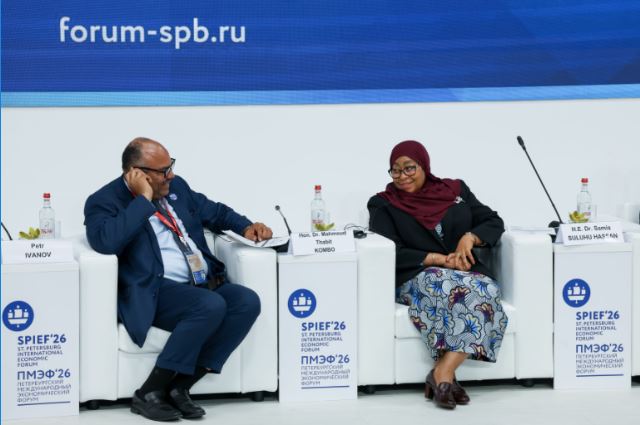
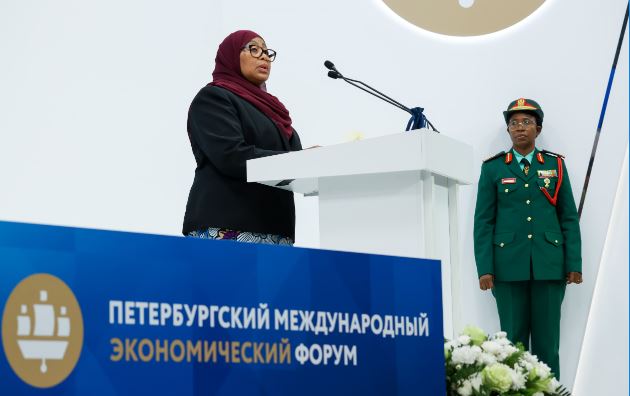
The highlight of the visit was President Hassan’s participation in the plenary session of the St. Petersburg International Economic Forum (SPIEF) on 5 June, where she reaffirmed Tanzania’s interest in building small modular reactors (SMRs) together with Russia, including floating power units (FPUs).
“We encourage Tanzania not to stop at this stage and to learn how to use uranium at home. Given its coastal areas, island geography and powerful rivers, Tanzania sees opportunities in floating nuclear solutions.
And if this work moves forward, and the nuclear industry is fully established in Tanzania, then in the 2030s we can consider creating a powerful unit or even a two-unit nuclear power plant,” emphasised Rosatom Director General Alexey Likhachev.
Tanzania is among Africa’s leading countries in terms of uranium resources, with the Mkuju River project playing a key role in unlocking this potential. The resource base of the Nyota deposit, being developed by Mantra Tanzania Ltd. (a part of Rosatom Group), is estimated at 58,5 ths tonnes of uranium, making it one of the Africa’s largest.
The pilot processing plant, successfully launched in July 2025, has given the engineering team a detailed and encouraging picture of technological conditions on site A first test batch of uranium was produced at the pilot plant, and its subsequent modernization improved uranium recovery from the ore. Preparatory activities are currently underway at the project site, with construction of the main production complex, designed for a capacity of up to 3 ths tonnes of uranium per year, scheduled to start in the fourth quarter of this year. These technologies are particularly relevant for Tanzania, where energy consumption growth rates are extremely high.
The expertise Rosatom has gained from its uranium projects in Tanzania is directly transferable to the deployment of complete nuclear energy solutions. Leveraging its unique position as one of the few corporations in the world that controls the entire nuclear fuel cycle, from uranium mining to NPP construction, Rosatom is actively implementing this integrated model. A prime example of this is the launch of construction of the first nuclear power plant in Uzbekistan, a project that mirrors the comprehensive approach Rosatom is proposing for Tanzania.
In parallel with the Tanzanian talks, on 4 June 2026, the Presidents of Russia and Uzbekistan, Vladimir Putin and Shavkat Mirziyoyev, launched the construction of Uzbekistan’s first NPP. The official first concrete pouring ceremony for the first power unit took place at the site in Farish District, Jizzakh Region, via a live video link with St. Petersburg.
This is a unique project of an integrated small modular nuclear power plant (SNPP) with the Russian RITM-200N reactor. It is the world’s first export project where a compact small modular station is combined with the full infrastructure and scale of a large NPP. The ceremony was also attended by International Atomic Energy Agency (IAEA) Director General Rafael Grossi, who delivered a welcome address.
Students of the Tashkent branch of MEPhI National Research Nuclear University pressed a symbolic button to start construction. The total concrete volume for the foundation slab will be 10,000 cubic metres, with 133 cubic metres poured during the initial stage. On 4 June, the Committee for Industrial, Radiation and Nuclear Safety of Uzbekistan issued a licence for the construction of the power unit.
“Uzbekistan is embarking on a path of accelerated high-tech development, and it is a great honor for Rosatom to be part of this historic process. Together with our partners, we are only at the beginning of the project’s implementation, yet its significance is already evident. Once commissioned, the NPP will be capable of supplying up to 14% of the country’s electricity demand.
This will provide a powerful boost to industrial, technological, and economic development. Moreover, the atomic city project that we have proposed to Uzbekistan will create an entirely new community. What grows around the NPP will be much more than a satellite town – it will be a genuine science city showcasing advanced nuclear and related technologies,” emphasised First Deputy Director General for Nuclear Energy at Rosatom Andrey Petrov.
The Uzbekistan project clearly demonstrates Rosatom’s systematic approach: building a unique NPP, creating a national nuclear industry from scratch (a branch of MEPhI has already been opened in Tashkent, where hundreds of students are studying), and forming a new social environment.
This experience is extremely valuable for Tanzania. The Mkuju River project has already become a platform for training engineering personnel and developing modern infrastructure in the south-east of the country. Total investment in the project is estimated at USD 1 billion. The project is expected to create over 4,000 new jobs during the construction and operation of the mining and processing complex, which is scheduled to be commissioned in 2029.
The development of nuclear energy in Tanzania, which started with a large-scale uranium project, is moving to a new level. President Samia Suluhu Hassan’s visit to Moscow and participation in SPIEF 2026 have laid a solid foundation for the transition from raw material extraction to electricity generation, which will become a powerful driver of the country’s socio-economic development for decades to come.
Reference:
The St. Petersburg International Economic Forum (SPIEF) is one of the most important events in the economic space of the CIS. The forum is organised by the Roscongress Foundation and has been held annually since 1997.
SPIEF has established itself as a key global event where contemporary economic challenges facing Russia, emerging markets and the world as a whole are discussed in a practical manner, practical decisions are taken, innovative large-scale projects are launched, and new approaches to adapting the global economy to current conditions take concrete shape.
Major Russian companies continue to expand their range of solutions for unlocking the potential of students and young employees. Rosatom and its enterprises are involved in establishing core university departments in Russian higher education institutions, implementing scholarship support programmes, major educational projects, arranging work placements and internships for students with subsequent employment opportunities.
The nuclear power plant in Uzbekistan is a unique project by Rosatom State Corporation. It is being implemented under the world’s first export contract for the construction of a small modular nuclear power plant (SNPP).
On May 27, 2024, an intergovernmental protocol amending the 2018 intergovernmental agreement was signed, expanding bilateral cooperation to include the construction of a small modular nuclear power plant in Uzbekistan, along with the corresponding contract.
On September 26, 2025, during the World Atomic Week international forum in Moscow, Rosatom and the Atomic Energy Agency under the Cabinet of Ministers of the Republic of Uzbekistan (Uzatom) signed documents expanding their cooperation.
On March 24, 2026, the parties signed a supplementary agreement to the contract for the construction of an integrated nuclear power plant in Uzbekistan. The project will comprise two large-capacity power units based on VVER-1000 reactors and two power units equipped with RITM-200N reactors, each with an electrical output of 55 MW.
Once fully commissioned, the NPP is expected to generate 17.2 billion kWh of electricity annually.
Sofia Morozova
Rosatom Africa PR Support
pr_support@acppro.ru