




A New Era for Students and Teachers In recent years, Tanzania has made significant progress in expanding access to education.
However, many students still face major challenges, including limited learning resources lack of personalized academic support and language barriers that affect understanding.
As the world rapidly embraces digital transformation, Artificial Intelligence (AI) is emerging as a powerful tool to bridge these gaps and reshape the future of learning. AI in education is not just about advanced technology—it is about improving how students learn, how teachers teach and how knowledge is shared.
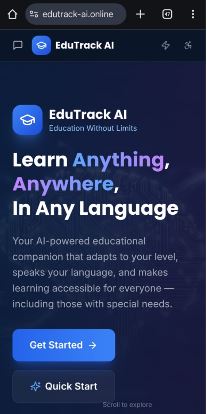
From simplifying complex subjects to providing instant academic support, AI is helping create a more inclusive and effective learning environment. One emerging example of this transformation is EDUTRACK, an AI-powered education platform developed in Tanzania.
The platform is designed to support students, teachers and parents by making learning more accessible, interactive, and personalized.
“EDUTRACK was created to give every student equal access to quality education support, regardless of their background. We believe AI can bridge the gap between traditional learning challenges and the future of education in Tanzania”.
— Lordrick Julius Meela, Founder of EDUTRACK
Through AI-powered tools, learners are able to:
Understand difficult topics through simplified explanations
Access instant academic assistance across multiple subjects
Improve research and reading through smart summarization
Learn in multiple languages, including Swahili
For teachers, such platforms offer opportunities to better manage classrooms, track student progress and deliver content in more engaging ways.
Parents are also able to follow their children’s academic journey more closely, strengthening the connection between home and school learning.
What makes AI-driven platforms particularly important in Tanzania is their potential to overcome traditional barriers. With limited access to physical learning materials in some areas, digital solutions can provide students with resources that were previously out of
Moreover, AI can support inclusive education by offering tools that cater to different learning needs, including students with disabilities or those who require alternative learning methods.
As technology continues to evolve, the integration of AI in education is expected to play a major role in shaping the country’s academic future. It opens doors for innovation, encourages independent learning, and prepares students for a world that is increasingly driven by digital skills.
While challenges such as internet access and digital literacy still need to be addressed, the direction is clear: AI has the potential to transform education in Tanzania in a meaningful and lasting way.
The rise of platforms like EDUTRACK highlights how local innovation can contribute to solving real educational challenges and creating opportunities for the next generation. More information about the platform can be accessed at edutrack-ai.online