



WAF – Dar es Salaam: It has been stated that research is a key pillar in strengthening the country’s preparedness and capacity to combat epidemics and provide important evidence that guides policy decisions, guidelines and strategies to combat epidemics, support early detection, disease surveillance and the development of tests, vaccines and treatments.
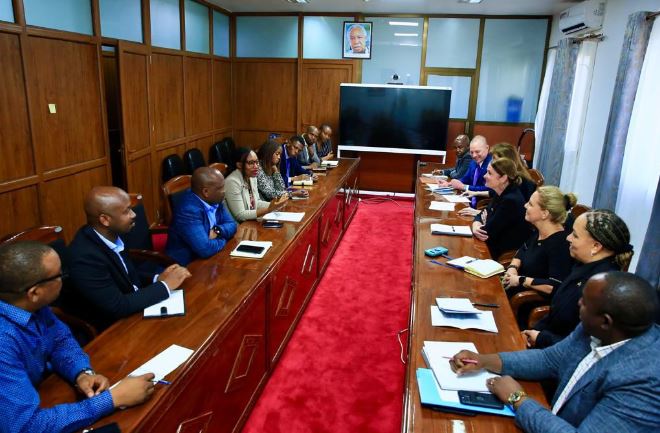
Chief Medical Officer of the Government Dr. Grace Magembe said on February 11, 2026 during a meeting with the US Army Research Institute ‘Walter Reed Army Institute of Research’ (WRAIR) held at the sub-offices of the Ministry of Health in Dar es Salaam.
“Tanzania has set specific priorities to strengthen disease surveillance and response (IDSR) systems, expand the scope of laboratory capacity including genetic surveillance, strengthen digital health systems and use of data to make decisions”, said Dr. Magembe
He said the capacity of Kibong’oto Hospital in conducting research and the National Laboratory in detecting and monitoring diseases where all these institutions have received international accreditation.
Dr. Magembe said that the Government sees a great opportunity to develop strategic cooperation with the US Walter Reed Institute of Research (WRAIR), especially in strengthening early warning systems for the detection of infectious diseases, their monitoring and statistical analysis, technology transfer and strengthening the capacity of local research through institutions like NIMR in controlling and having statistics on antimicrobial resistance (AMR).
For her part, Colonel Brianna Perata, who is the Commander of the US Army Research Institute, has promised that the US Military Institute will continue cooperation with Tanzania, especially in various research to improve the health sector in the country and requested to continue to be given cooperation with Tanzania.
Areas recommended for urgent cooperation at the meeting include collecting, integrating and analyzing data on antimicrobial resistance (AMR), strengthening the integration of digital health and laboratory data into a single national system, and strengthening the capacity of regional laboratories, especially in border areas.